
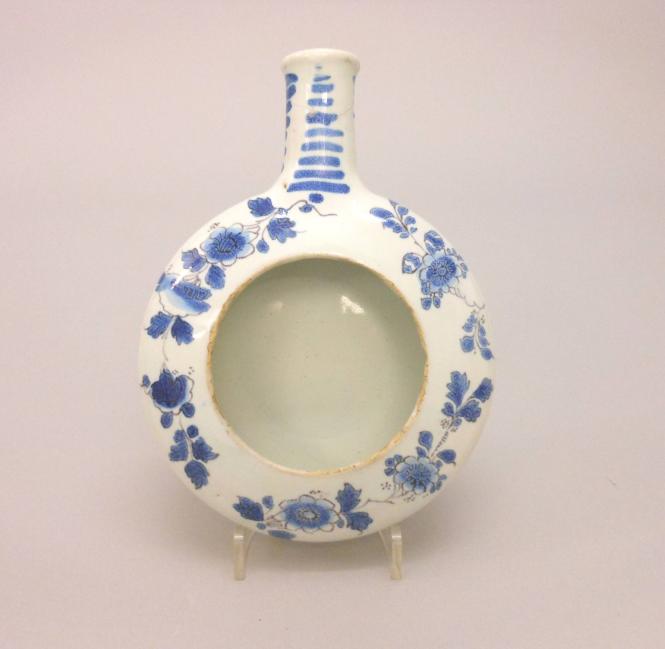
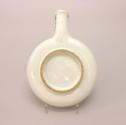
Hand-held Spittoon
CultureFrench
OriginMarseille, France
Period18th Century
Datelate 17th-early 18th Century
MediumTin-glazed earthenware (grand feu faience)
DimensionsOverall: 3.8 × 16.5 cm (1 1/2 × 6 1/2 in.)
DescriptionWhile spittoons, or cuspidors, were among the objects found in a dentist’s office, they also belonged to the material culture of tobacco. By the mid-18th century, tobacco had reached a level of mass consumption in France, and was most commonly consumed by snuff taking and smoking. Porcelain snuffboxes were collected and offered as gifts. At the lower end of the market, the spittoon, which was used to spit in, was an essential accompaniment of the pipe smoker.
Credit LineThe Pierre Karch and Mariel O'Neill-Karch Collection.
Object numberG14.4.3
Classifications
European CeramicsSub-classification
French Earthenware - FaïenceStatus
Not on view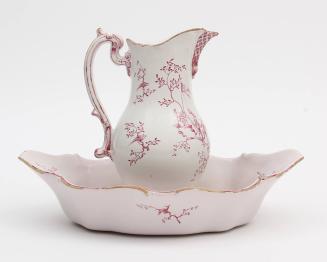
Artist / Maker: Manufacture de la Veuve Perrin
1750-1800
Object number: G12.14.2a-b
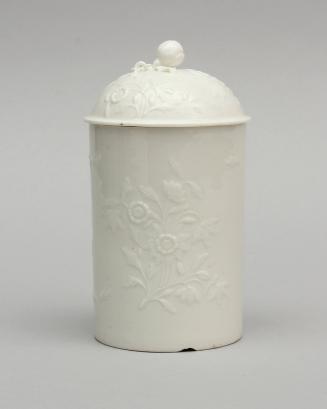
Artist / Maker: Mennecy Porcelain Manufactory
ca.1750-1755
Object number: G96.5.95a-b
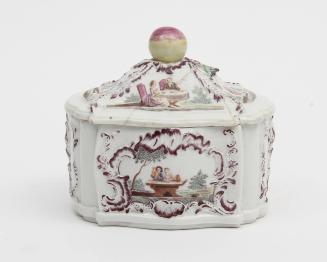
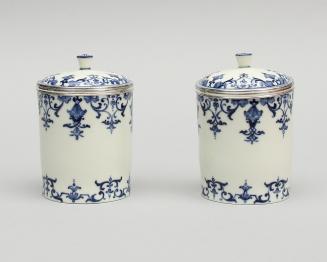
Artist / Maker: Saint-Cloud Porcelain Manufactory
ca.1725-1740
Object number: G96.5.72.1-.2
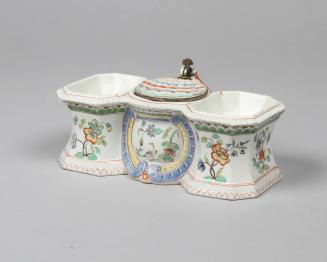
Artist / Maker: Chantilly Porcelain Manufactory
ca. 1735-40
Object number: G19.10.1

Artist / Maker: Colima or Nayarit artist(s)
300 BCE - 300 CE
Object number: G83.1.28

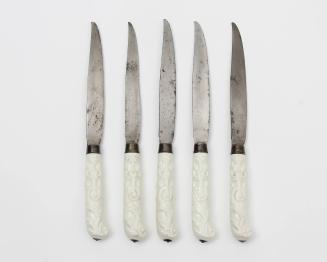
Artist / Maker: Saint-Cloud Porcelain Manufactory
1740-1760
Object number: G17.2.1.1-5