
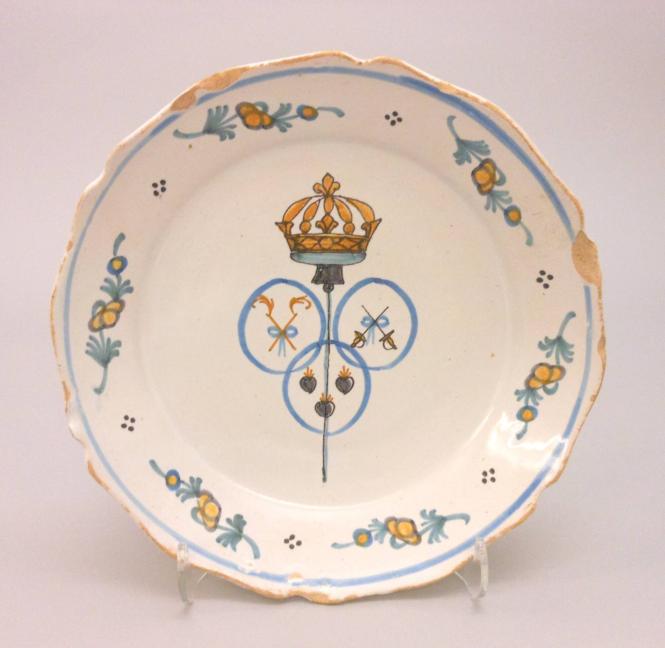
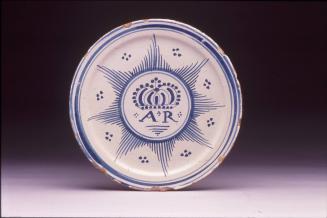
Revolutionary Plate
CultureFrench
ManufacturedNevers, France
Period18th Century
Date1789-1792
MediumTin-glazed earthenware (grand feu faience)
DimensionsOverall: 1.7 × 22.9 cm (11/16 × 9 in.)
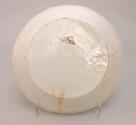
Markings"B" on bottom of plate
DescriptionWith the onset of the French Revolution, plates conveying political messages became a popular product of Nevers faience makers. This plate presents the symbols of the crown, standing for the monarchy, the swords, for the aristocracy, the crosiers, for the clergy, and the hearts for the common people. The crown placed above the three other social classes perhaps suggests the desire for a constitutional monarchy as opposed to absolutism.
Credit LineThe Pierre Karch and Mariel O'Neill-Karch Collection.
Object numberG14.4.15
Classifications
European CeramicsSub-classification
French Earthenware - FaïenceStatus
On view
Artist / Maker: Meissen Porcelain Manufactory
ca.1735
Object number: G83.1.638a-b

Artist / Maker: Royal Porcelain Manufactory
ca.1775
Object number: G83.1.688
Artist / Maker: Minton
1862
Object number: G05.4.5
Artist / Maker: Meissen Porcelain Manufactory
1737
Object number: G83.1.661
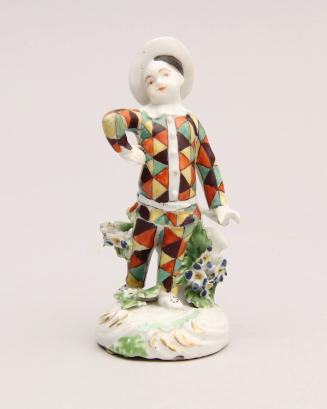
Artist / Maker: Derby Porcelain Factory
ca.1765-1770
Object number: G83.1.865
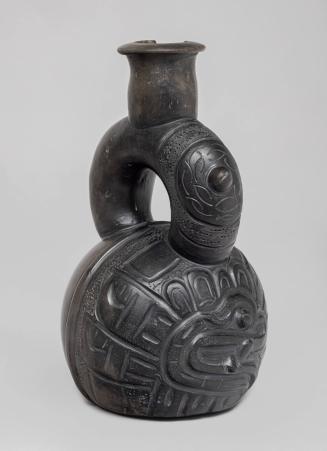
Artist / Maker: Cupisnique artist(s)
1250 BCE - 1 CE
Object number: G83.1.153